

When people discover the price of quality cashmere for the first time, the natural question is: what makes it so different from regular wool? Both are natural animal fibres. Both are warm, breathable and sustainable. So why does cashmere cost so much more?
The answer lies in scarcity, fineness, and the extraordinary process behind producing it. In this guide we break down every key difference between cashmere and wool so you can make a genuinely informed decision.
Where Does Cashmere Come From?
Cashmere comes from the fine undercoat of the Cashmere goat — primarily bred in the high plateaus of Mongolia, China, Afghanistan and Northern India. Each goat produces just 150–200 grams of usable cashmere per year, which means a single shawl requires the annual yield of three to five goats.
Regular wool comes from sheep — most commonly Merino, Corriedale or British breeds. A single Merino sheep produces around 4–5 kilograms of wool annually. The sheer difference in yield is the primary driver of cashmere's price.
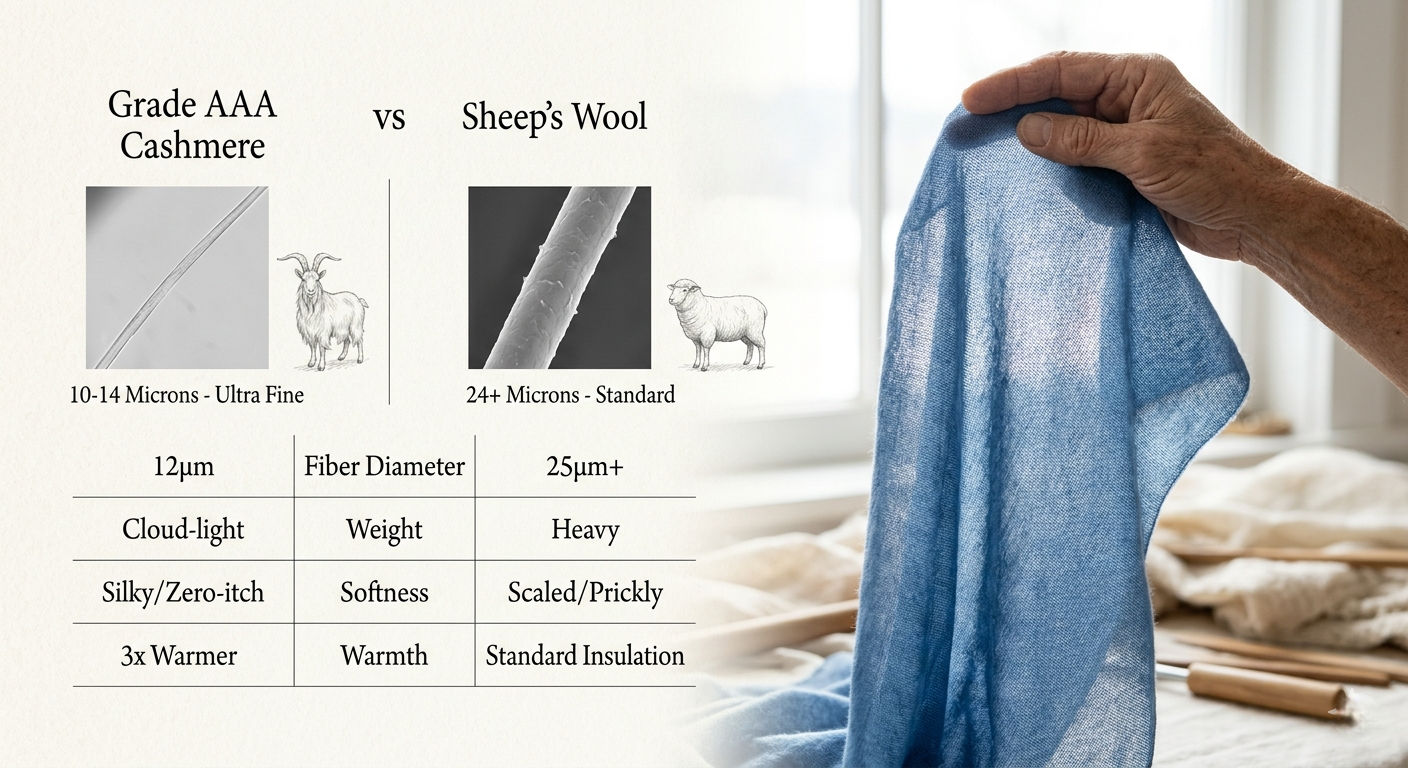
Fibre Diameter: The Key Measurement
Fibre diameter, measured in microns, determines how soft a fabric feels against skin. The finer the fibre, the softer the feel.
- Grade AAA cashmere: 14–15.5 microns
- Grade A cashmere: 16–17 microns
- Merino wool: 17–24 microns
- Standard wool: 30–40+ microns
Anything above around 25 microns starts to feel scratchy against sensitive skin. Grade AAA cashmere — the finest grade we use at CloudSpun — is so fine it's completely itch-free even for people who normally react to wool.
Warmth-to-Weight Ratio
This is where cashmere truly shines. Cashmere is up to eight times warmer than sheep's wool by weight. A 200g cashmere shawl will keep you warmer than a 400g wool wrap. This is because the hollow core structure of cashmere fibres traps significantly more air.
Durability
Here wool often has an edge. Wool fibres have a natural crimp that makes them more resilient to abrasion. Cashmere fibres are straighter and finer, making them more susceptible to pilling and wear if not cared for properly. However, high-grade cashmere that is well cared for will outlast poor-quality wool by many years.
Cashmere vs Merino Wool
Merino is the finest of the wool types and the most often compared to cashmere. Merino is durable, naturally odour-resistant and machine-washable — making it excellent for activewear and travel. But it cannot match cashmere for pure softness, warmth-to-weight, or sheer luxury feel.
Is Cashmere Worth the Investment?
If you're comparing a £30 acrylic scarf to a £180 cashmere shawl, of course wool wins on price. But compare like for like: a quality cashmere shawl worn regularly and cared for properly will last 10–20 years. The cost-per-wear drops dramatically, and you have a piece that becomes softer and more beautiful over time.
At CloudSpun, all our cashmere is ethically sourced and independently verified for grade. We believe luxury should be lasting — which is why we stand behind every piece we make.
Quick Comparison Table
| Feature | Cashmere (AAA) | Merino Wool | Standard Wool |
|---|---|---|---|
| Softness | ★★★★★ | ★★★★☆ | ★★☆☆☆ |
| Warmth | ★★★★★ | ★★★★☆ | ★★★☆☆ |
| Weight | Ultralight | Light | Heavy |
| Durability | ★★★☆☆ | ★★★★★ | ★★★★☆ |
| Price | Premium | Mid-range | Budget |
| Sustainability | High | High | Moderate |


