

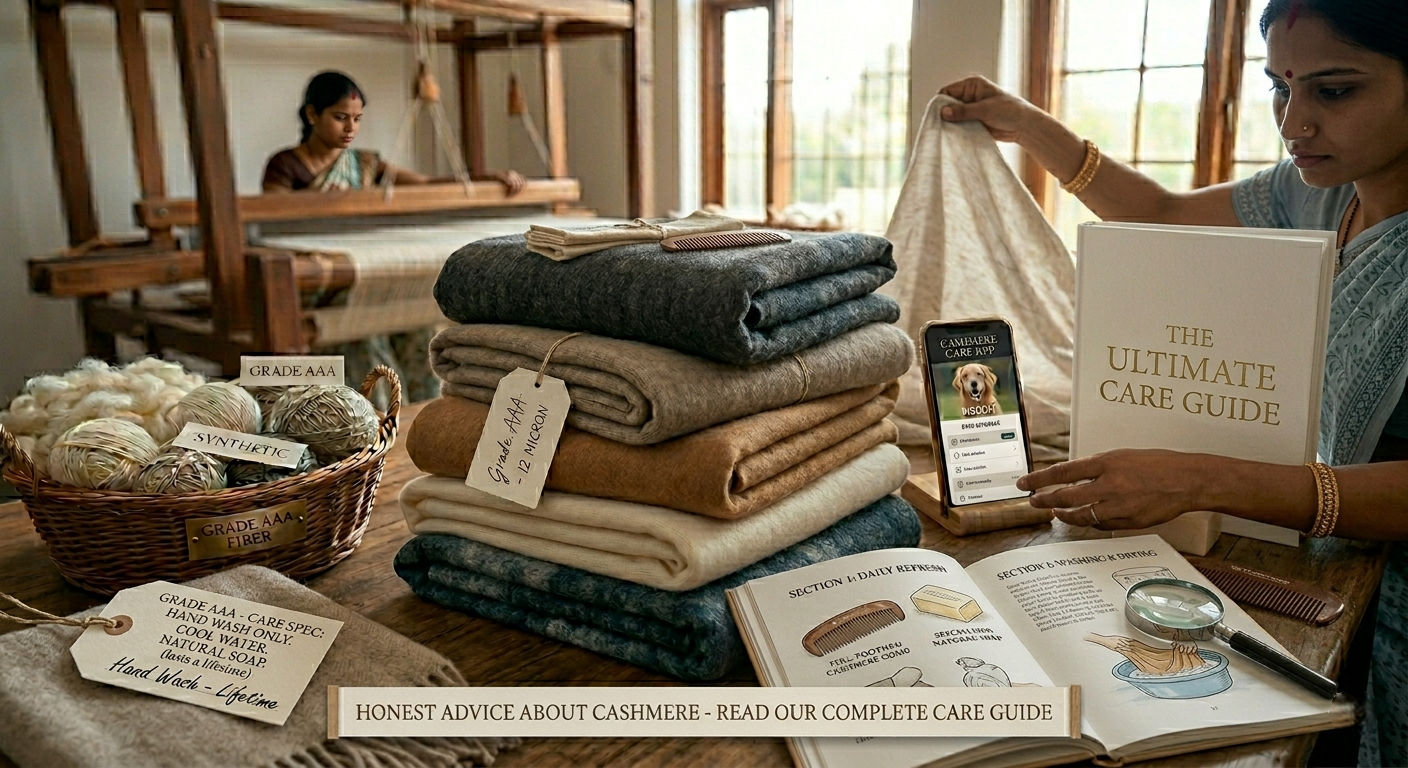
Walk into any department store and you'll find cashmere at wildly different price points — from £40 to £400 for what looks like a very similar product. The reason is grades. Cashmere is graded by fibre length and diameter, and the difference between a Grade C and Grade AAA fibre is the difference between scratchy and extraordinary.
At CloudSpun Cashmere, we work exclusively with Grade A, AA and AAA fibres — the top tier of the global cashmere market. Here's exactly what that means and why it should matter to you as a buyer.
How Is Cashmere Graded?
Cashmere grading is based on two key measurements:
- Fibre diameter (measured in microns — μm)
- Fibre length (measured in millimetres)
The finer and longer the fibre, the higher the grade — and the more expensive and rare the cashmere.
The Grading Scale Explained
Grade A Cashmere
Fibre diameter: 15–17 microns. Fibre length: 34mm+. This is premium cashmere — significantly finer than merino wool and genuinely soft against bare skin. Grade A forms the foundation of quality luxury cashmere.
Grade AA Cashmere
Fibre diameter: 15–16 microns. Fibre length: 36mm+. Noticeably finer and longer than Grade A, making it more luxuriously soft and less prone to pilling. Used in the finest commercial cashmere products.
Grade AAA Cashmere
Fibre diameter: 14–15.5 microns. Fibre length: 38mm+. This is the pinnacle. Grade AAA cashmere is the finest fibre commercially available — so delicate it's virtually weightless, and so soft it feels like a second skin. Pilling is minimal, warmth-to-weight is exceptional, and with proper care it lasts a lifetime.
What Does "Cashmere" Actually Mean on a Label?
Here's the frustrating truth: legally, a product can be labelled "100% cashmere" regardless of grade. A budget-brand cashmere jumper and a CloudSpun AAA shawl can both carry that label — but the actual fibre quality, and therefore the softness and longevity, are completely different.
The only way to know the grade is to ask the brand directly. We are fully transparent about our fibre sources and grades — all CloudSpun products list their grade on the product page.
How to Test Cashmere Quality at Home
If you receive a cashmere product and want to assess quality:
- Touch test: Rub the fabric against your neck. Quality cashmere should feel immediately soft, not prickly.
- Stretch test: Gently stretch a small area and release. Quality cashmere springs back to shape. Poor quality loses its shape.
- Pill check: Rub lightly with your palm. Some initial pilling is normal; excessive immediate pilling suggests short fibres (lower grade).
- Burn test: A genuine cashmere fibre burns like hair — slowly, with a smell of burning hair, and self-extinguishes. Synthetic cashmere burns with black smoke and melts.
Why Grade Matters for Personalised Cashmere
When you add embroidery to cashmere — whether initials, a name or a pet portrait — the fibre grade matters even more. Fine AAA fibres hold embroidery threads more beautifully and don't distort under the needle in the way coarser fibres do. Our artisan team works exclusively with AAA base fabric for all personalised pieces precisely because the results are consistently superior.
The Bottom Line
When you invest in Grade AAA cashmere, you're buying the finest natural fibre available. It costs more than standard cashmere — but it also lasts dramatically longer, feels incomparably better, and justifies the cost over its lifetime of use. We believe in making that investment transparent, which is why we publish fibre grades on every product we sell.


